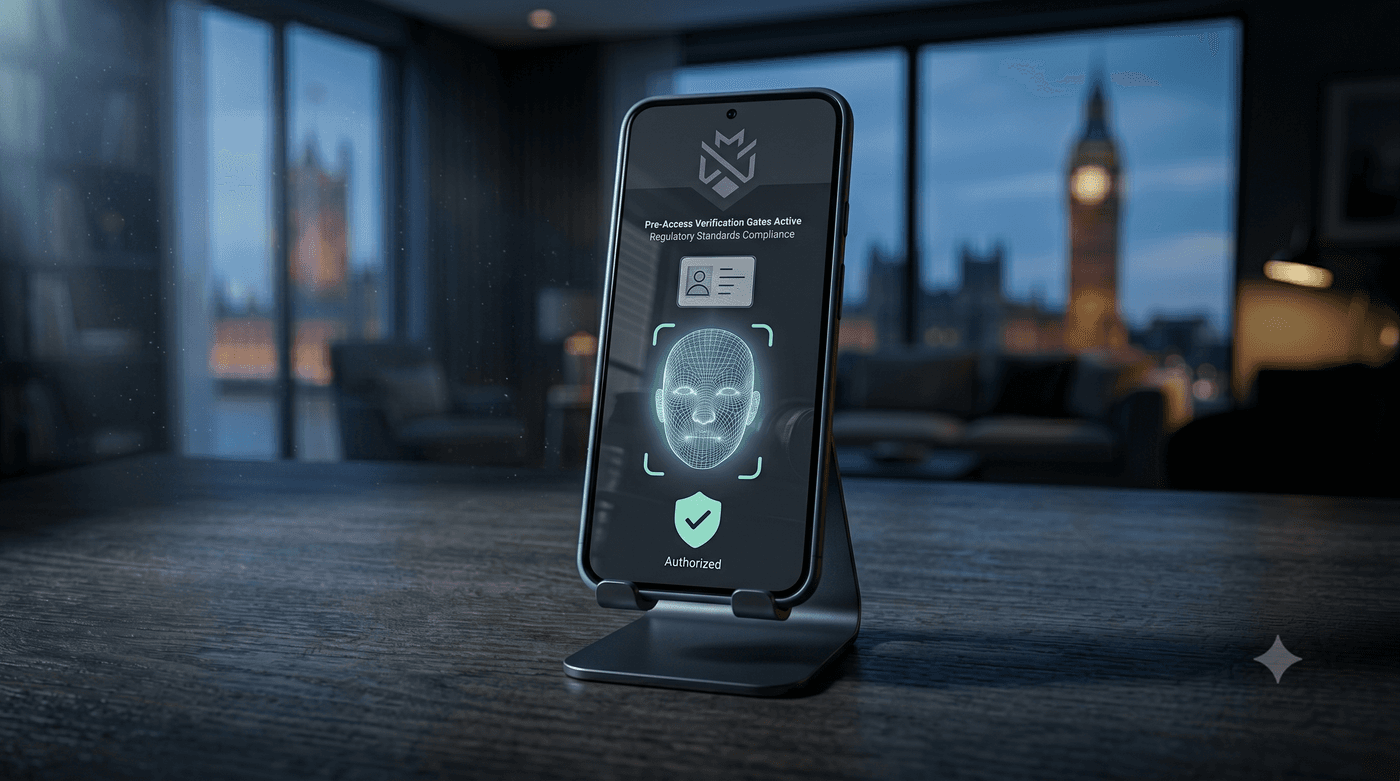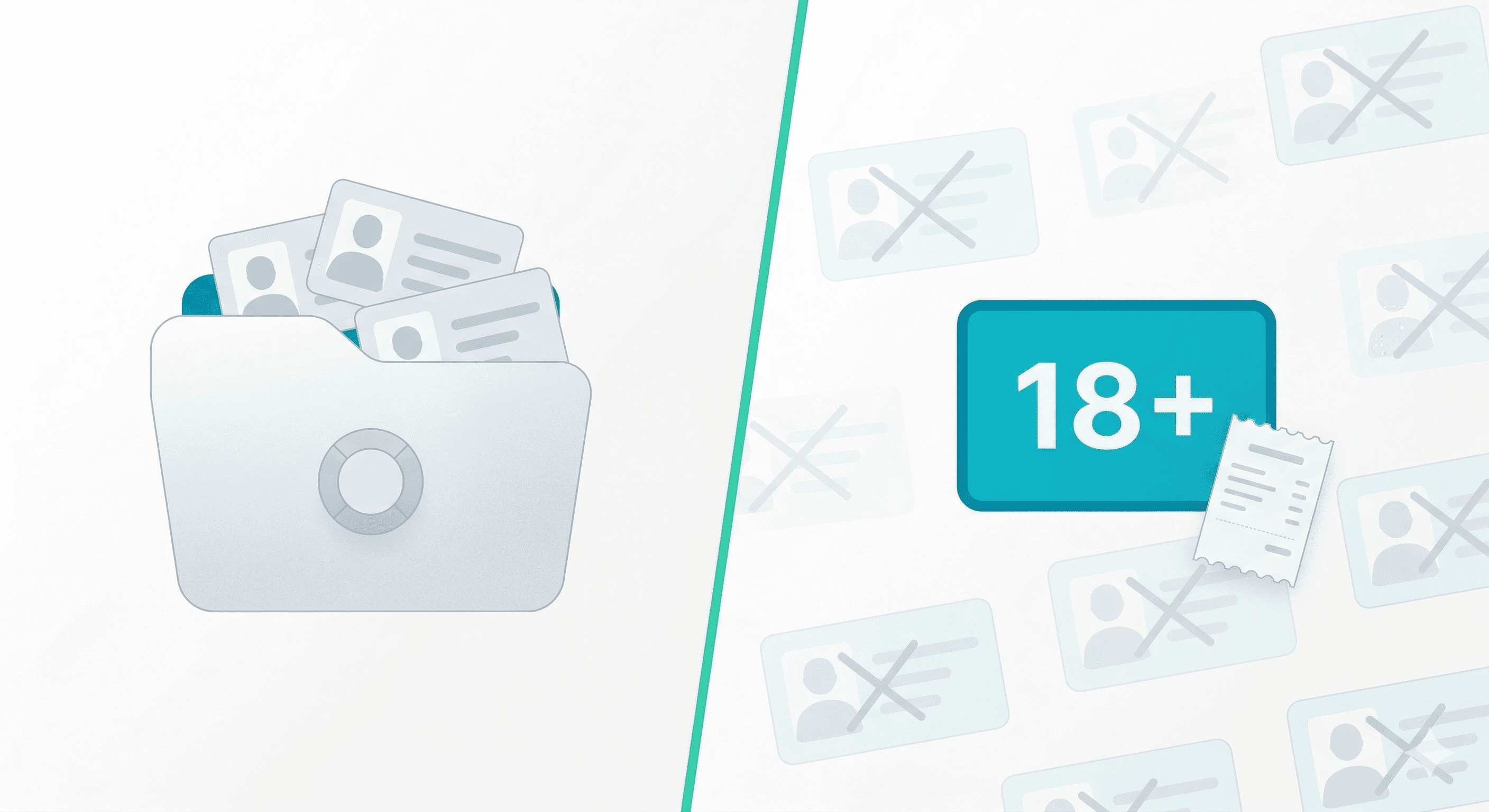
Traditional age checks often require users to upload a passport or driver’s licence and sometimes a selfie. The platform or a vendor then stores those images "for compliance." That creates a honeypot: a single breach can expose thousands of identity documents and faces.
At AgeOnce we return only an 18+ result and an Audit ID, with no document or face storage.
See how we do itKey points
No ID or face stored
You get only an 18+ result and an Audit ID, with no document gallery and no biometric database.
One integration, many regions
UK, EU, US, Australia: one API and flow that meets local expectations and data rules.
Prove compliance without data
Audit IDs let you show regulators that verification happened, without holding sensitive data.
Returning users
Re-verify with a quick face check across your and partners’ sites, with no need to resubmit ID.
How privacy-first age verification works
Privacy-first age verification replaces the usual “upload and store” pattern. The user still proves their age (e.g. via ID and liveness), but the system does not retain the raw documents or photos. It extracts only what’s needed, typically that the person is over a given age, and returns a signed outcome (e.g. an "18+ verified" token) to the business. No gallery of IDs, no long-term face database.
Why regulators prefer the privacy-first model
This approach aligns with data minimisation under GDPR and with regulatory guidance that favours "highly effective" age assurance without unnecessary data retention. Regulators and courts have grown more sensitive to mandatory identity checks that centralise sensitive data. Privacy-first design reduces that risk while still meeting legal obligations.
Business benefits for your platform
On your side, the upside is simple: you avoid holding the data attackers and regulators care about most. You get a yes/no plus an audit trail (e.g. a verification receipt) for compliance, without the liability of storing IDs or biometrics. In a typical privacy-first product, your platform receives only the outcome and an Audit ID; the provider does not keep a gallery of documents or faces, so there is nothing to breach and nothing to hand over.
Run the live demo to see a threshold outcome and Audit ID without ID storage on your side.
Frequently asked questions
It means proving a user meets an age threshold (for example 18+) without storing ID images, selfies, or a long-term face gallery on your platform. You receive a signed outcome and an Audit ID, not the underlying documents.
The user completes ID matching and liveness with a specialist provider. The provider extracts only the age threshold needed for access and returns a signed result. Raw passport or face images are not retained for your site to host.
No. Your WordPress site or app should keep only the verification outcome, age threshold, timestamp, and Audit ID. Document and biometric images stay off your servers.
Data minimisation reduces breach liability and aligns with "highly effective" age assurance that does not require unnecessary identity dossiers. DSA and related guidance emphasise privacy alongside effectiveness.
Typically a yes/no (or threshold such as 18+), plus an Audit ID for compliance evidence. That is enough to unlock restricted content or checkout without building an ID vault.