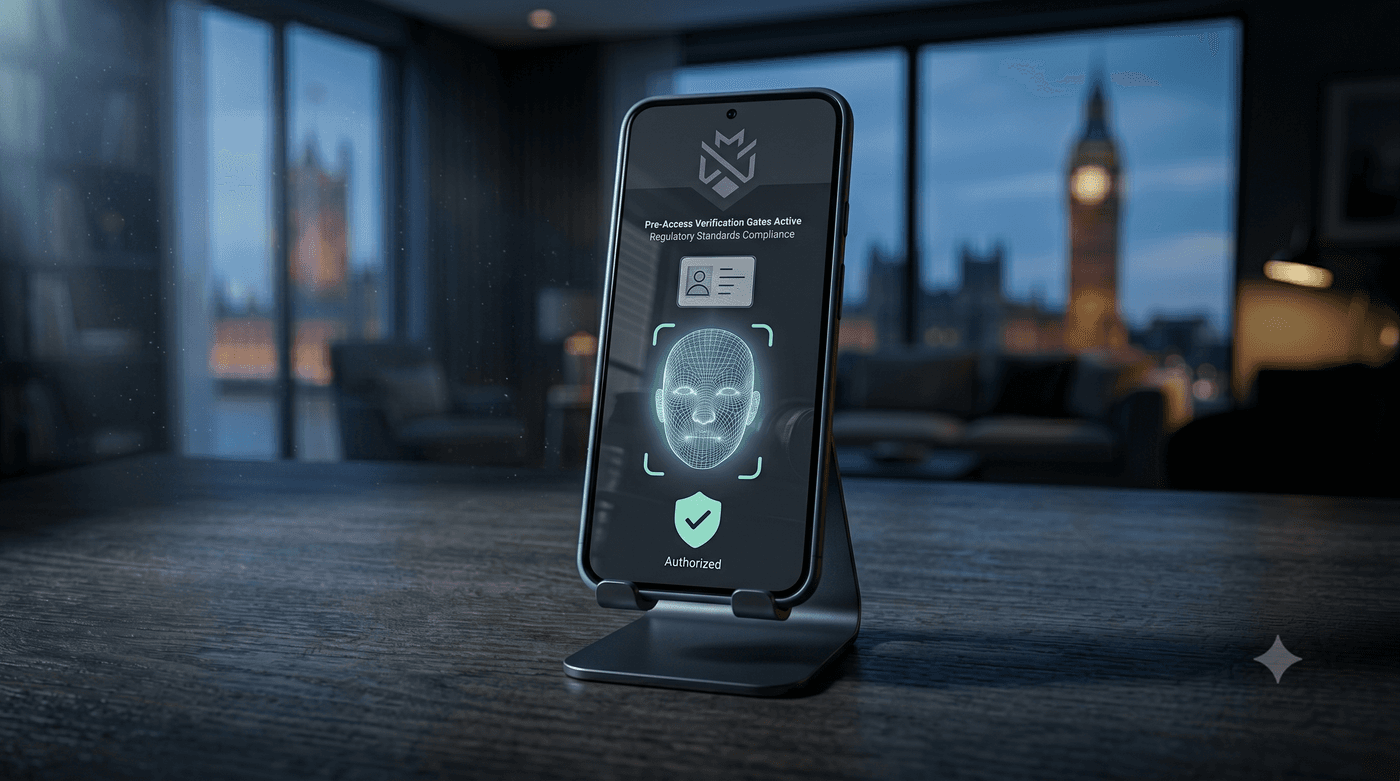
Australia’s Age-Restricted Material Codes, in effect from March 2026, extend age verification and age assurance beyond adult content to a wide set of digital services. In scope are social media, AI chatbots, app stores, online gaming, search engines, messaging services, and pornography sites. The goal is to limit minors’ access to high-impact harmful content (e.g. serious violence, pornography, self-harm material) while keeping adult access workable.
Accepted methods and penalties
Platforms in scope must use strong age assurance. Regulators recognise methods such as facial age estimation, digital wallets, and photo ID–based verification. The codes set out expectations for when and how age is checked, and penalties for non-compliance are high, up to tens of millions of dollars, so treating this as a checkbox exercise is risky.
Australian penalties
Non-compliance with the Age-Restricted Material Codes can attract penalties into the tens of millions of AUD. The eSafety Commissioner has signalled willingness to act against non-compliant services.
What global platforms should learn from Australia
Other regulators watch how Australia enforces these codes and how privacy and usability are balanced in practice. Age verification that is effective and privacy-preserving (e.g. token or assertion-based, without retaining IDs or face images) fits Australian expectations and is easier to reuse when similar rules appear elsewhere.
Action steps if you serve Australian users
If you operate in Australia or serve Australian users, map your services to the codes, confirm which content categories trigger age checks, and choose an age-assurance method that meets the standard and minimises data retention.
Frequently asked questions
The Age-Restricted Material Codes came into effect in March 2026 and apply to a broad set of online services.
Social media, AI chatbots, app stores, online gaming, search engines, messaging, and pornography sites. The scope extends well beyond adult content.
Regulators recognise facial age estimation, digital wallets, and photo ID-based verification. Self-declaration alone is not sufficient for high-impact content.
Penalties can reach tens of millions of Australian dollars. Enforcement is active, and regulators have signalled willingness to act against non-compliant platforms.